




How to Choose the Right Cooking Oil Supplier for Your Business
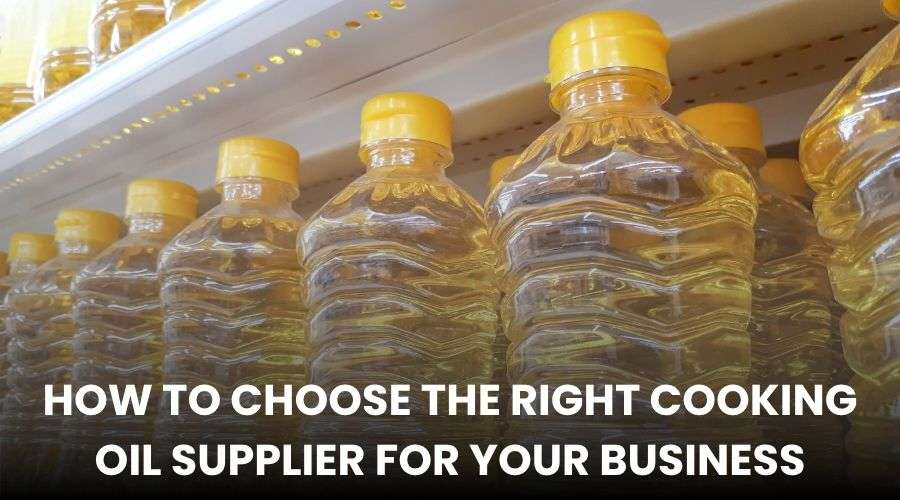
Choosing a cooking oil supplier might seem simple. You ask for a price, they deliver a tanker, and you pay. But many bulk buyers learn the hard way that this approach fails.
The wrong supplier can send oil with high free fatty acids. Your fries come out dark and greasy. Delivery shows up three days late. Your kitchen runs out on a Friday night. Or worse, the oil is adulterated with cheaper grades. These problems cost you money. They also waste your management time.
This guide gives you a six-step process. You will learn what specifications to ask for, which certifications matter, and how to test a supplier before signing a long-term deal. The goal is to reduce your risk and save you weeks of trial and error.
Step 1 – Know Your Oil Specifications Before You Ask for Quotes
Do not call suppliers and ask for "frying oil." That is too vague. You will receive five different quotes for five different products. Comparing them becomes impossible.
Write down your requirements first. Focus on these four numbers.
Free fatty acid (FFA). This measures how much of the oil has broken down. Lower is better for frying. Ask for 0.1% or less for fresh oil. High FFA means the oil will smoke earlier and spoil faster.
Peroxide value (PV). This tells you if the oil is already rancid. Fresh oil should have a PV below 1.0 meq/kg. Anything above 2.0 is already old.
Smoke point. This is the temperature at which oil starts burning. For deep frying, you need 400°F or higher. For salad dressings, a lower smoke point is fine. Know your cooking method before you ask.
Iodine value. This affects how stable the oil is during repeated heating. High iodine value means more unsaturated fats. Those oils break down faster under high heat.
Write these four numbers down. Send them with every request for a quote. Suppliers will respect you for being specific. You will get comparable quotes back.
Step 2 – Verify Food Safety & Quality Certifications
Price is important. But bad oil can hurt your customers or fail a health inspection. Do not skip the paperwork.
Ask every potential supplier for their current certificates. Look for these three types.
GFSI-benchmarked certification. This includes BRCGS, IFS, or SQF. Anyone is acceptable. It means the supplier passed a rigorous third-party audit within the last year.
HACCP o ISO 22000. These are food safety management systems. They show the supplier controls hazards like contamination and cross-contact.
Halal or Kosher if you need them. Many restaurants and food manufacturers serve customers with dietary requirements. Get the certificate in writing.
For palm oil buyers, ask for RSPO certification. This covers sustainability. Some of your business customers may require it.
Request a certificate of analysis (COA) for the current batch. This document lists actual test results for FFA, PV, and contaminants like heavy metals or pesticides. A supplier who cannot provide a recent COA is a red flag. Do not proceed.
Step 3 – Choose Sourcing Model
You have three ways to buy bulk cooking oil. Each change affects your price, risk, and daily workload.
Direct from a refinery. This gives you the lowest price per liter or ton. You buy in large volumes, usually twenty tons or more per month. You handle your own logistics and quality checks. This model works well for large manufacturers with dedicated storage tanks.
Authorized distributor. They buy from refineries and store oil locally. They deliver smaller quantities to you. Their price is five to ten percent higher. But you save on storage and logistics. This is the safest choice for restaurants, hotels, and medium-sized food businesses.
Commodity trader. They buy and sell oil without owning it. Prices can be lower. But quality varies from batch to batch. Use them only for spot purchases when your regular supplier cannot deliver.
If you are new to bulk buying, start with a distributor. Place two or three orders. Learn how oil behaves in your kitchen or production line. Then consider moving directly to save money.
Step 4 – Audit Supplier Logistics & Delivery Consistency
Oil is a liquid. It can be contaminated during transport. It can also arrive late or at the wrong temperature.
Ask these three logistics questions before you sign anything.
What type of bulk transport do they use? ISO tanks are best for imports. Flexitanks work for smaller ocean shipments. Tanker trucks are common for local delivery. Each type requires cleaning between different oil types. Ask for their cleaning protocol in writing.
What is their on-time delivery percentage? A good supplier will tell you this number. Eighty-five percent or higher is acceptable for local delivery. Ask for two customer references and call them. Ask specifically about late deliveries and how the supplier handled them.
How should you store oil at your facility? You need clean, dry storage tanks. If you store oil for more than two weeks, ask about nitrogen blanketing. This puts a layer of gas on top of the oil. It slows down oxidation and rancidity.
A supplier who cannot provide tank cleaning certificates or delivery records is not ready for your business.
Step 5 – Negotiate Price, Payment Terms & Quality Clauses
Price discussions are easy. Contract details are where problems hide. Protect yourself in writing.
Price lock period. Oil prices change weekly. Ask the supplier to lock in a price for thirty, sixty, or ninety days. This gives you predictable costs. Some suppliers offer index-based pricing tied to public commodity prices like the Palm Oil Index. That is fair if the index is transparent.
Quality rejection rights. Write a clause that says you can reject any batch that fails your specifications. Name the independent lab you will use for testing. Both sides must accept the lab's results.
Sampling protocol. Decide together how to take samples. You should take samples before the oil leaves the supplier's facility and again when it arrives at yours. Compare both sets of results.
Payment terms. Net thirty days is standard for local distributors. For imports, a letter of credit protects both sides. Never pay one hundred percent upfront to a new supplier.
Do not accept verbal price agreements. Get every number in writing before the first delivery.
Step 6 – Run a Trial Order Before Committing Long-Term
A trial order is cheap insurance. Do not skip this step.
Order the smallest viable volume. For a distributor, that might be one tanker truck or five tons. For a direct refinery, they may require a full container.
Test every batch that arrives. Measure FFA, peroxide value, and smoke point. Compare your results to the supplier's COA. If your numbers are worse, ask why.
Evaluate delivery timing. Did they arrive on the promised day? Was the driver professional? Did the paperwork arrive before the truck?
Test the oil in your actual cooking process. Fry a batch of your standard product. Check for color, flavor, and how long the oil lasts.
Run two trial orders before approving the supplier. If both go well, you have a reliable partner. If problems appear, you have lost only a small volume. That is far better than discovering issues with a full container.
Common Bulk Oil Buying Mistakes & Quick Fixes
Mistake: Switching oils without testing fryer performance.
You assume all vegetable oils behave the same. They do not.
Fix: Request a technical data sheet before changing products.
Mistake: Accepting 'best price' without quality data.
The cheapest oil often has high FFA or old stock.
Fix: Ask for a COA from the current batch before discussing price.
Mistake: No backup supplier.
Your main supplier has a breakdown or runs out of stock. You cannot cook.
Fix: Qualify at least two suppliers. Keep the second one as a backup.
Supplier Vetting Checklist
Print this checklist. Use it for every new cooking oil supplier.
✅ Written specifications match your FFA, PV, and smoke point needs.
✅ Current GFSI or HACCP certificate (less than twelve months old).
✅ Certificate of analysis for the current production batch.
✅ Two trade references from buyers similar to your size.
✅ Logistics plan with tank cleaning protocols.
✅ Draft contract with quality rejection and sampling clauses.
✅ Trial order completed successfully. Two trials are better.
✅ Do not move to a long-term contract until every box is checked.
Conclusion
Choosing a cooking oil supplier is not about finding the lowest price on day one. It is about avoiding costly problems on day one hundred. Define your specifications. Verify certifications. Start with a distributor if you are new. Run a trial order. Write clear contract terms. Suppliers who resist these steps are hiding something. Suppliers who welcome your questions are worth keeping.
Featured Articles
Maintaining quality is the utmost requirement of every exporter. If we talk about red onions, exp
READ FULLRed onions are among the primary ingredients in many cu
READ FULLThe global sunflower oil market is valued at approximately $24.3 billion in 2026, with projection
READ FULLLeave Your Comments
Global Agri and Metal Tech Ltd(G.a.m.t Ltd)

Have a question or need a quote? Fill out this form and our team will get back to you quickly!